Abyss AB-1266 Phi TC: how much amplifier do you need?
The Abyss AB-1266 Phi TC is 50Ω with a sensitivity of 88.0 dB/mW, which is 101.0 dB/V. To reach 100 dB SPL — genuinely loud, louder than most people listen — it needs 16 mW, or 0.89 V across the drivers.
That is a moderate load. Most USB dongles handle it without complaint; the weakest phone outputs will run out of volume before they run out of quality. 257 of 280 sources here have enough headroom. The cheapest portable source that does the job is the Generic CX31993 dongles at $12.
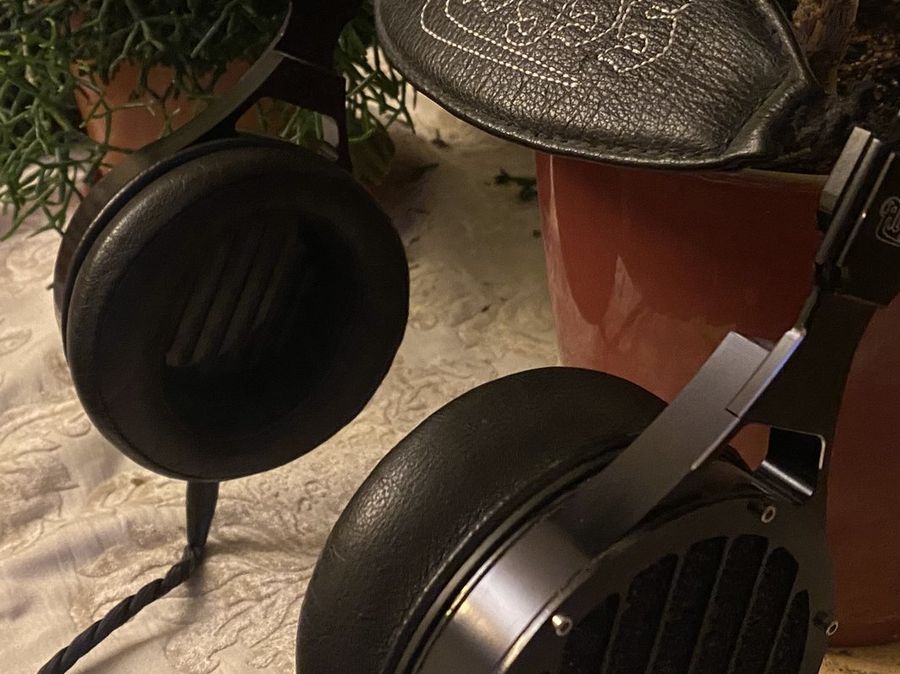
From my own rack. I owned an Abyss 1266 TC and always ran it from a Wells Audio Milo. Straight from my Chord Dave it was not a disaster, but it lacked power; through the Milo it was clearly better and stronger. More on that system.
The two numbers that decide everything
Sensitivity here is in dB per milliwatt. Why the unit matters.
Where this sensitivity figure comes from
Abyss publishes this directly as 88 dB/mW (none stated. Abyss prints it lowercase as '88 db/mW'; impedance is printed '50 ohm nominal'), per milliwatt, so nothing was converted.
The maker adds a power recommendation of its own: No wattage recommendation appears in the AB-1266 specification list. The page's body text does state that 'High performance headphones require a q[uality amplifier]...' but gives no figure. By contrast Abyss DOES publish 'Recommended Amplifier Power: 2-8 watts (@50 ohms)' for the Diana TC Signature, so the absence on the AB-1266 page is Abyss's own choice, not a fetch gap.
Source: abyss-headphones.com. How this data was built.
What is printed there, and what it is worth
| As it is labelled | As printed | Tolerance | Standard |
|---|---|---|---|
| Frequency Response | 5 Hz - 45 KHz | not printed | not printed |
Abyss prints 5 Hz - 45 KHz for the Abyss AB-1266 Phi TC, under the heading “Frequency Response”. Source: abyss-headphones.com.
No tolerance is printed with it, so “5 Hz - 45 KHz” says nothing about how loud this headphone actually is at 5 Hz.
Only what the maker printed; maker by maker.
Power, voltage and current by listening level
| Level | What it is | Power | Voltage | Current |
|---|---|---|---|---|
| 85 dB SPL | quiet background listening | 0.50 mW | 0.16 V | 3.2 mA |
| 95 dB SPL | normal listening | 5.0 mW | 0.50 V | 10.0 mA |
| 100 dB SPL | loud listening | 16 mW | 0.89 V | 17.8 mA |
| 105 dB SPL | very loud | 50 mW | 1.58 V | 31.7 mA |
| 110 dB SPL | peaks on dynamic music | 158 mW | 2.82 V | 56.3 mA |
Most people listen between 75 and 85 dB; the 100 dB row leaves room for peaks.
The cheapest sources that drive them with room to spare
The 15 cheapest of the 280 sources here that reach 100 dB SPL into 50Ω with at least 10 dB of headroom and no known hiss or output-impedance problem with these headphones. All 280 sources, judged for these headphones.
| Source | Type | Price | Power into 50Ω | Headroom | Verdict |
|---|---|---|---|---|---|
| Tempotec Sonata BHD Pro | USB dongle | $60 | 179 mW | +11 dB | Comfortable |
| JDS Labs Atom+ (2nd gen) | desktop amplifier | $99 | 762 mW | +17 dB | Comfortable |
| Schiit Magni Heresy | desktop amplifier | $99 | 1.6 W | +20 dB | Comfortable |
| ddHiFi TC44 Pro E2 | USB dongle | $99 | 160 mW | +10 dB | Comfortable |
| Schiit Magni+ | desktop amplifier | $109 | 1.3 W | +19 dB | Comfortable |
| Schiit Magni Unity | desktop amplifier | $119 | 1.5 W | +20 dB | Comfortable |
| JDS Labs Atom Amp 2 | desktop amplifier | $129 | 1.7 W | +20 dB | Comfortable |
| Tanchjim LUNA | USB dongle | $140 | 191 mW | +11 dB | Comfortable |
| FiiO K11 | desktop DAC/amp | $143 | 335 mW | +13 dB | Comfortable |
| Schiit Vali 3 | desktop amplifier | $149 | 1.0 W | +18 dB | Comfortable |
| Topping L30 II | desktop amplifier | $149 | 2.2 W | +21 dB | Comfortable |
| SMSL HO100 | desktop amplifier | $160 | 975 mW | +18 dB | Comfortable |
| Shanling H2 | portable amplifier | $169 | 435 mW | +14 dB | Comfortable |
| xDuoo MT-604 | desktop amplifier | $169 | 1.3 W | +19 dB | Comfortable |
| FiiO K11 R2R | desktop DAC/amp | $176 | 295 mW | +13 dB | Comfortable |
The three ways a source goes wrong
Hiss. At 101.0 dB/V these are sensitive enough to reveal a source's own noise floor. The noisiest source in the database, the Schiit Mjolnir 3, would put its hiss at roughly 9 dB SPL in these headphones — faintly audible in a silent room. Check your own source.
Output impedance. At 50Ω these want a source output impedance below 6.25Ω to satisfy the one-eighth rule; 34 of the 192 sources that publish one miss it. Check yours here.
Similar headphones
Abyss AB-1266 Phi CC
42Ω · 88.0 dB · Moderate
See requirements →Abyss Diana V2
42Ω · 91.0 dB/mW · Moderate
See requirements →Abyss Diana Phi
32Ω · 91.0 dB/mW · Moderate
See requirements →AKG K612 Pro
120Ω · 91.8 dB/mW · Moderate
See requirements →ZMF Auteur
300Ω · 96.0 dB/mW · Moderate
See requirements →ZMF Auteur Black
300Ω · 96.0 dB/mW · Moderate
See requirements →Compared with its stablemates: vs 109 Pro · vs 99 Classics · vs AB-1266 Phi CC · vs AEON 2 Closed · vs Ananda Nano · vs Arya Organic · vs Arya Stealth · vs ATH-M40X · vs ATH-M50X · vs ATH-R70X · vs Atrium · vs Clear MG · vs Diana MR · vs Diana Phi · vs Diana V2 · vs DT 1990 Pro (250Ω) · vs DT 770 Pro (250Ω) · vs DT 770 Pro (80Ω) · vs DT 880 Edition (600Ω) · vs DT 900 Pro X · vs DT 990 Pro (250Ω) · vs Edition XS · vs Edition XV · vs Empyrean · vs Expanse · vs HD 560S · vs HD 600 · vs HD 650 · vs HD 660S2 · vs HD 6XX (Drop) · vs HD 800 · vs HD 800S · vs HE400se · vs K371 · vs K612 Pro · vs K702 · vs LCD-2 Classic · vs LCD-5 · vs LCD-X 2021 · vs MDR-7506 · vs MDR-MV1 · vs MM-500 · vs SHP9500 · vs SHP9600 · vs SR80x · vs Stealth · vs Sundara · vs Susvara · vs T50RP MK3 · vs Utopia · vs Verite Closed.